
Patent Research • User Testing & Data Analysis • Sketch Modeling • SubD Modeling
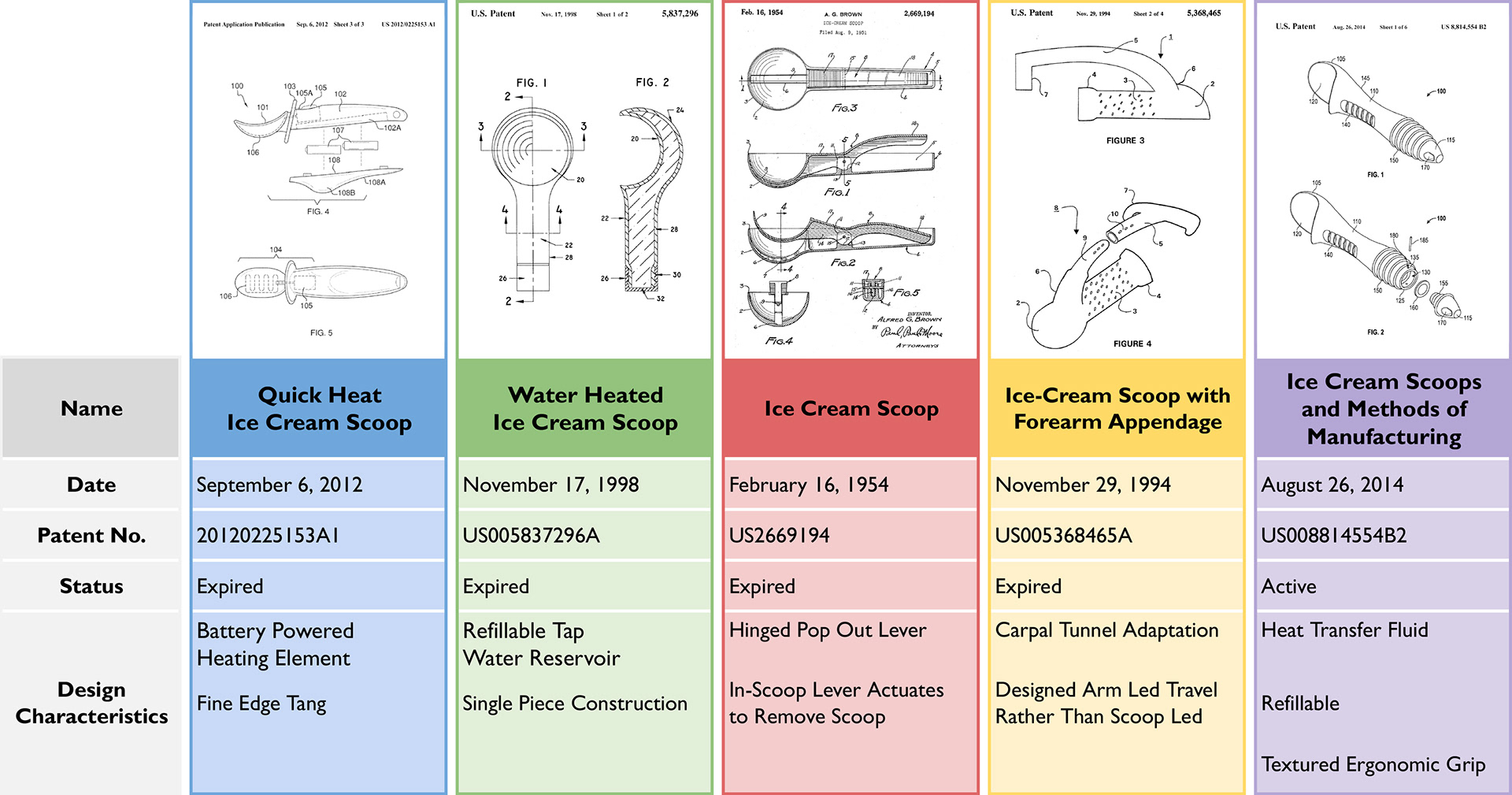
I scream, you scream, we all scream for ice cream! Ice cream is something we all know and love, but the time and energy it takes to scoop ice cream out of the carton can sometimes be frustrating. Prior to the invention of the ice cream scoop in 1897 by Alfred L. Craelle, spoons were used to scoop ice cream. Through the 20th and 21st centuries ice cream scoops continued to evolve (see patent chart below). Refrigeration and electricity brought ice cream into people’s homes, widening the market beyond parlors and restaurants to everyday consumers. Manufacturers began to differentiate their scoops from one another by adding heating elements, mold shapes, and trigger mechanisms. Despite these advancements, current ice cream scoop designs are still not meeting the needs of consumers. Instead, consumers are “hacking” scoops to compensate for the shortcomings of designers and manufacturers. It's time to make ice cream easier to scoop.
Insight
Major Ice Cream Scoop Patents from the 20th & 21st Century
Consumer Base
The first step in identifying user needs and obstacles was to conduct a questionnaire with target users between the ages of 50-60 years old. The survey results illustrated that:
• People of all age demographics complained of fatigue in the wrist, palm, and hand.
• People between the ages of 50-60 years old complained of forearm fatigue and stated arm strength was a limiting factor for them.
Regardless of age people have found alternate solutions to make scooping easier, including:
• Storing the carton in a freezer bag
• Letting the carton sit out for 3 minutes
• Placing the ice cream carton in the microwave for 30 secs
• Cutting a grid into the ice cream with a knife
• Warming the scoop under running water
• Pressing in a thumb indentation into the ice cream
• Scooping in an s-pattern
Surveyors stressed that current designs take too much time to use, are cumbersome and uncomfortable. They all would consider purchasing an improved ice cream scoop.
Product Analysis - Efficiency Testing
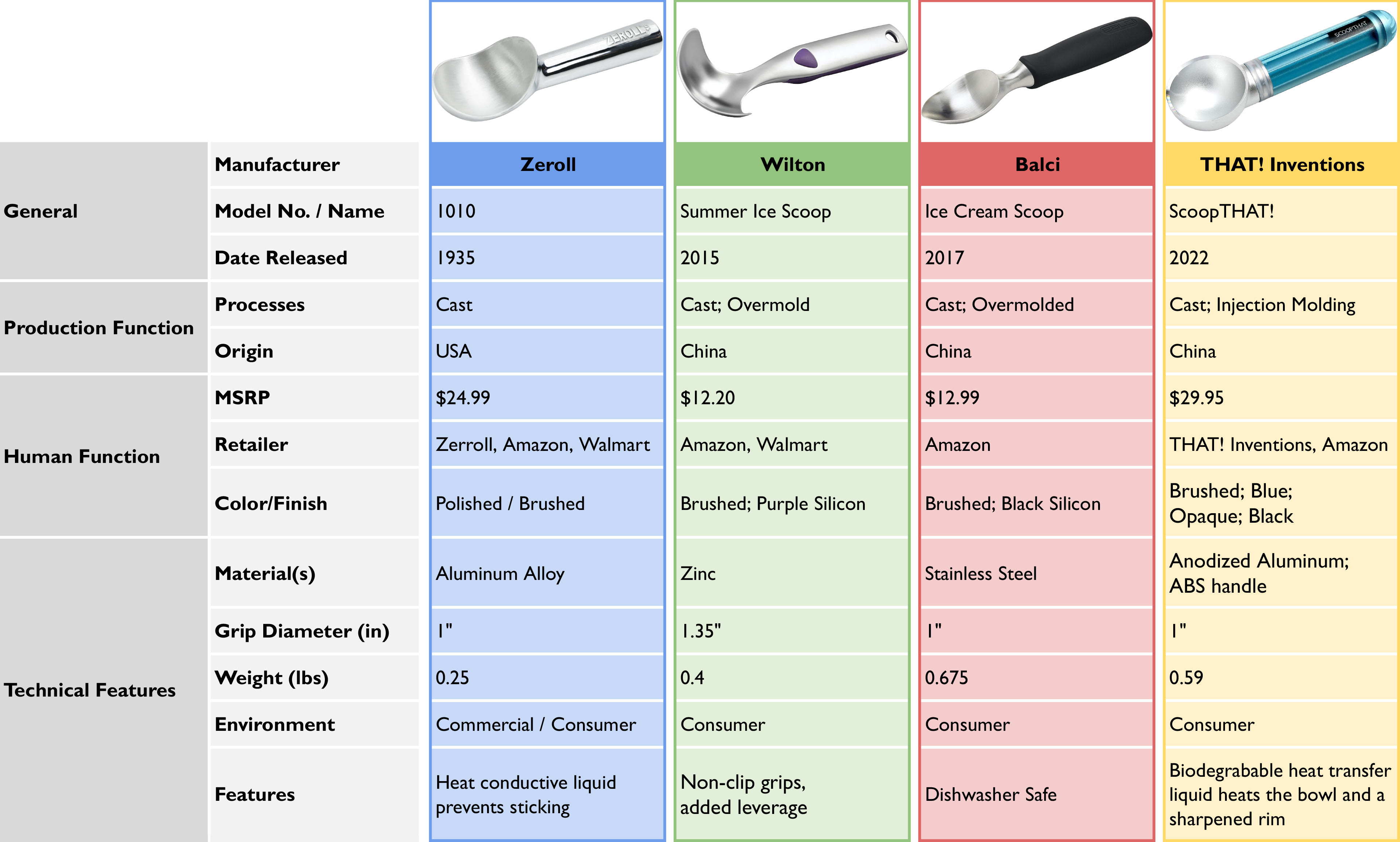
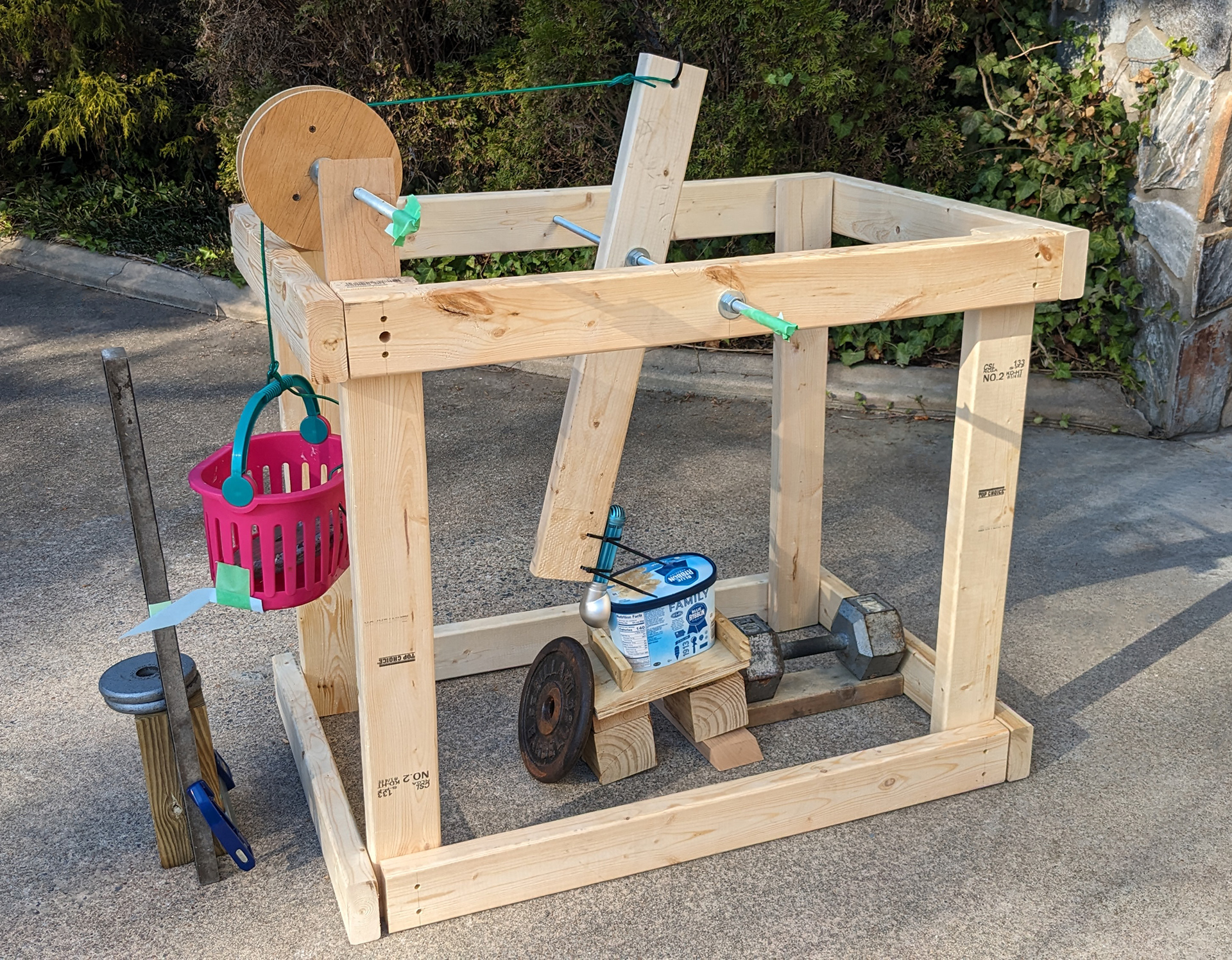
In order to accurately compare the efficiency of the following ice cream scoops, a testing apparatus was built to replicate a scoop being passed through a carton of ice cream. The experiment procedure stabilized variables like temperature, time out of the freezer, and the force applied to each scoop during testing.
Testing Apparatus
Temperatures of the room and the ice cream were recorded to prove a minimal heat fluctuation between tests.
The experiment recorded the amount of time it took for a weighted basket to travel a specified distance (d) depending on which scoop was traveling through a fresh carton of ice cream.
The test results showed, ScoopTHAT!, a scoop with a single beveled edge and oil insulated handle cut through the ice cream and out performed the scoops with a rounded edge as shown by the change in time (Δt).

Product Analysis - User Testing
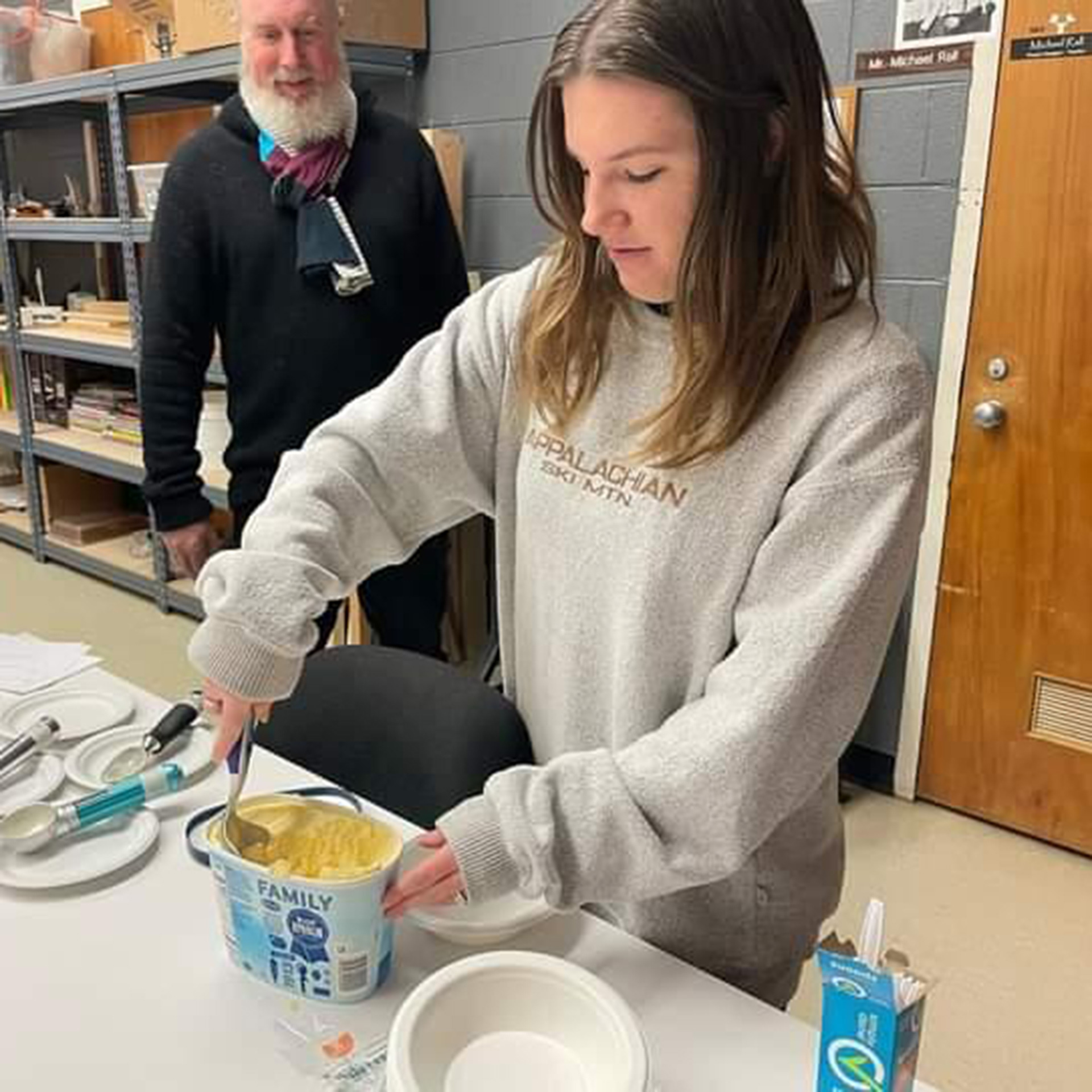
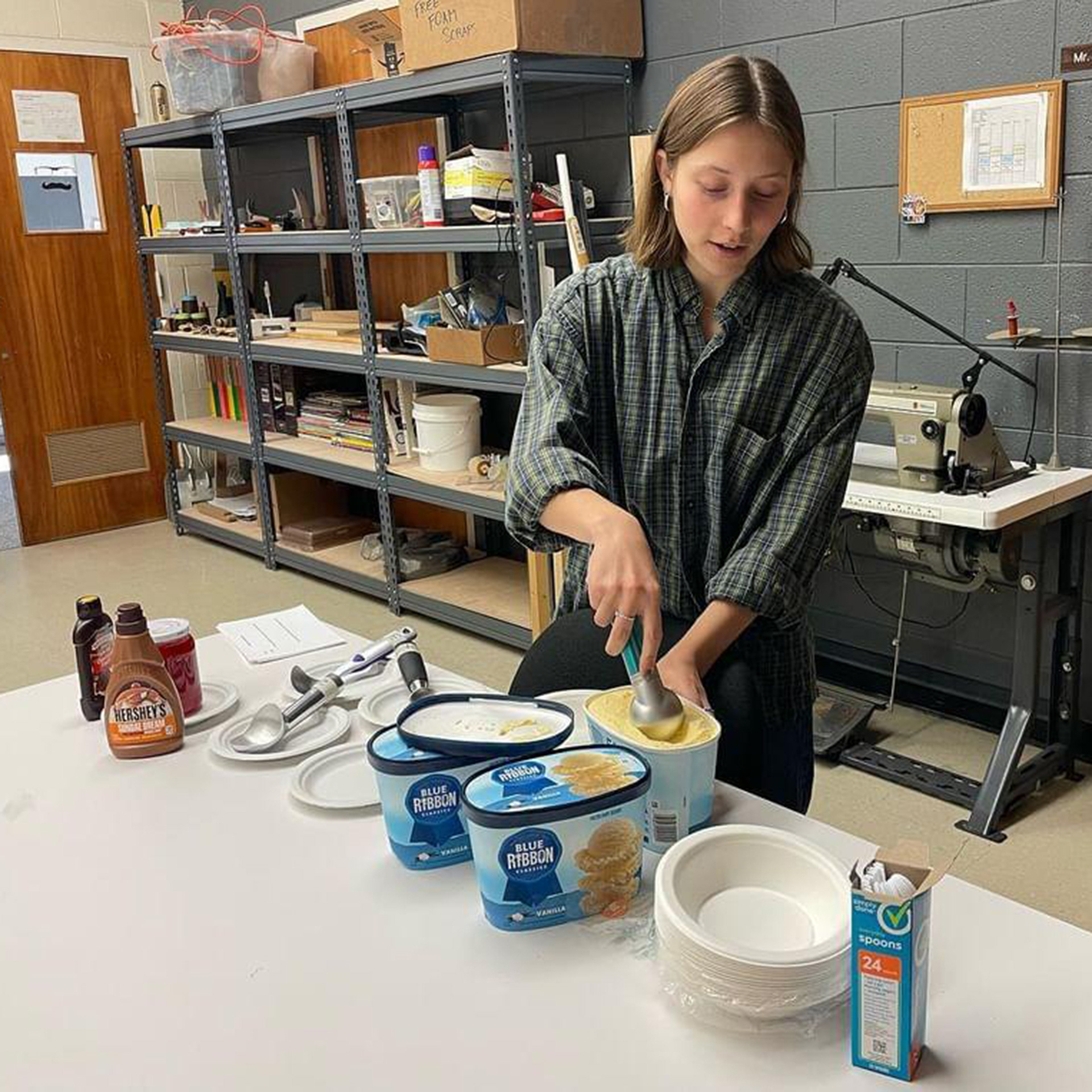
To support the mathematical conclusions from the efficiency testing, the same ice cream scoops were handed out to users to observe which design features were the most ergonomic and user-friendly. The following conclusions were made:
• An ergonomic grip forced people to conform to a single grip style and did not facilitate variability in grip styles.
• A rounded grip offered versatility in designs and grip styles.
• Scoop shapes that could be used at different angles also facilitated versatility in designs.

Market Opportunity
Research illustrated that there is not an ice cream scoop currently on the market that suitably considers the consumers’ need for a scoop that is comfortable, prevents muscle and joint fatigue, and accommodates an array of scoop and grip styles and strengths. The ideal scoop must:
• Have a grip that allows anyone to intuitively hold the scoop comfortably regardless of their physical condition.
• Integrate a system to eliminate ice cream sticking to the scoop.
• Employ a feature which raises the kinetic energy efficiency of the scoop to allow people with diminished arm strength to comfortably use it.
Exploration
Design Characteristics
• A sharpened scoop edge to focus the user’s force efficiently in the ice cream.
• A grip that is non-angular to allow a smaller degree of bend in the interphalangeal and metacarpophalangeal joints.
• Heating that can be drawn from the user’s body heat to prevent the ice cream from sticking.
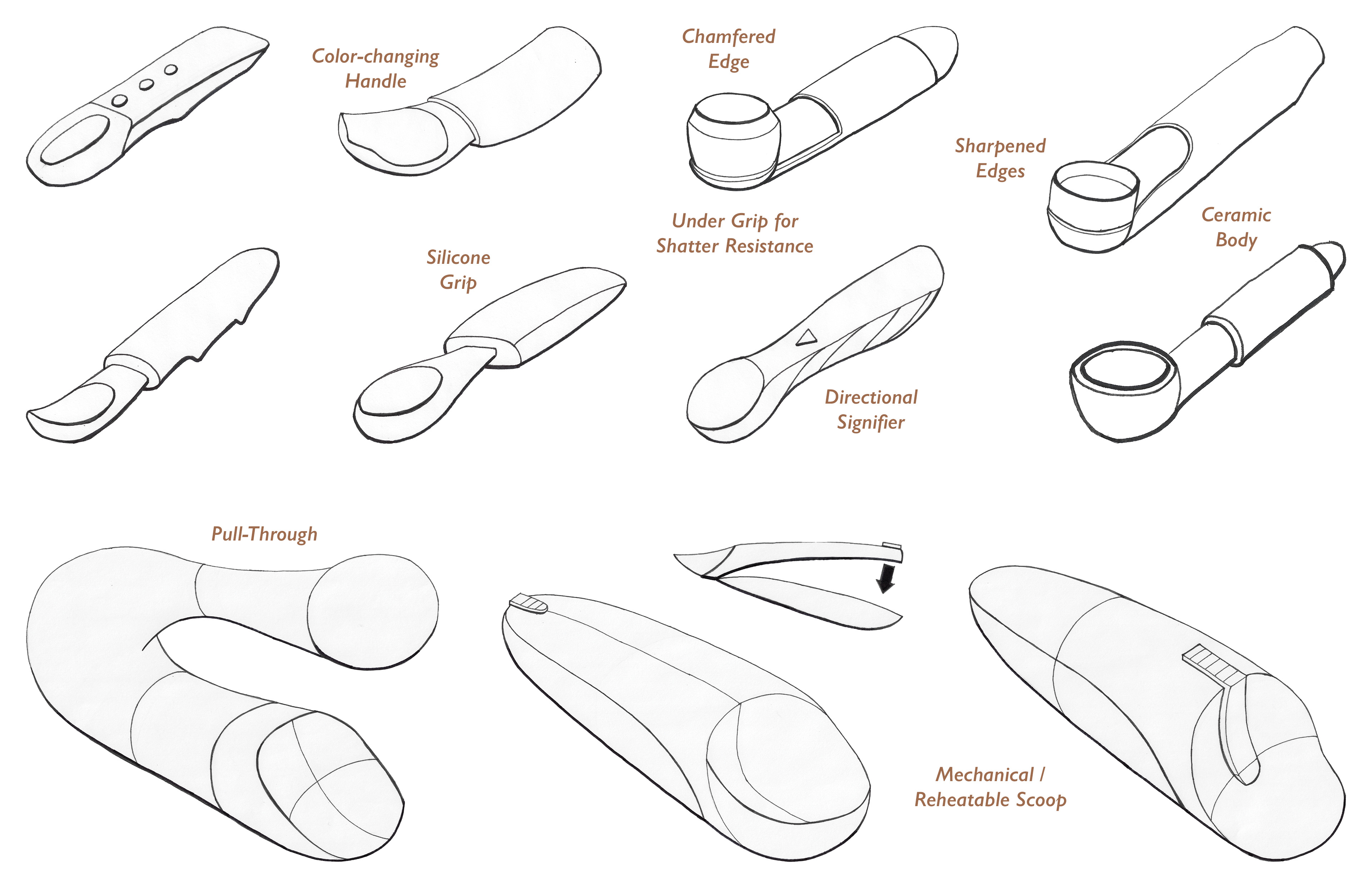
Initial Concepts
Concept Development
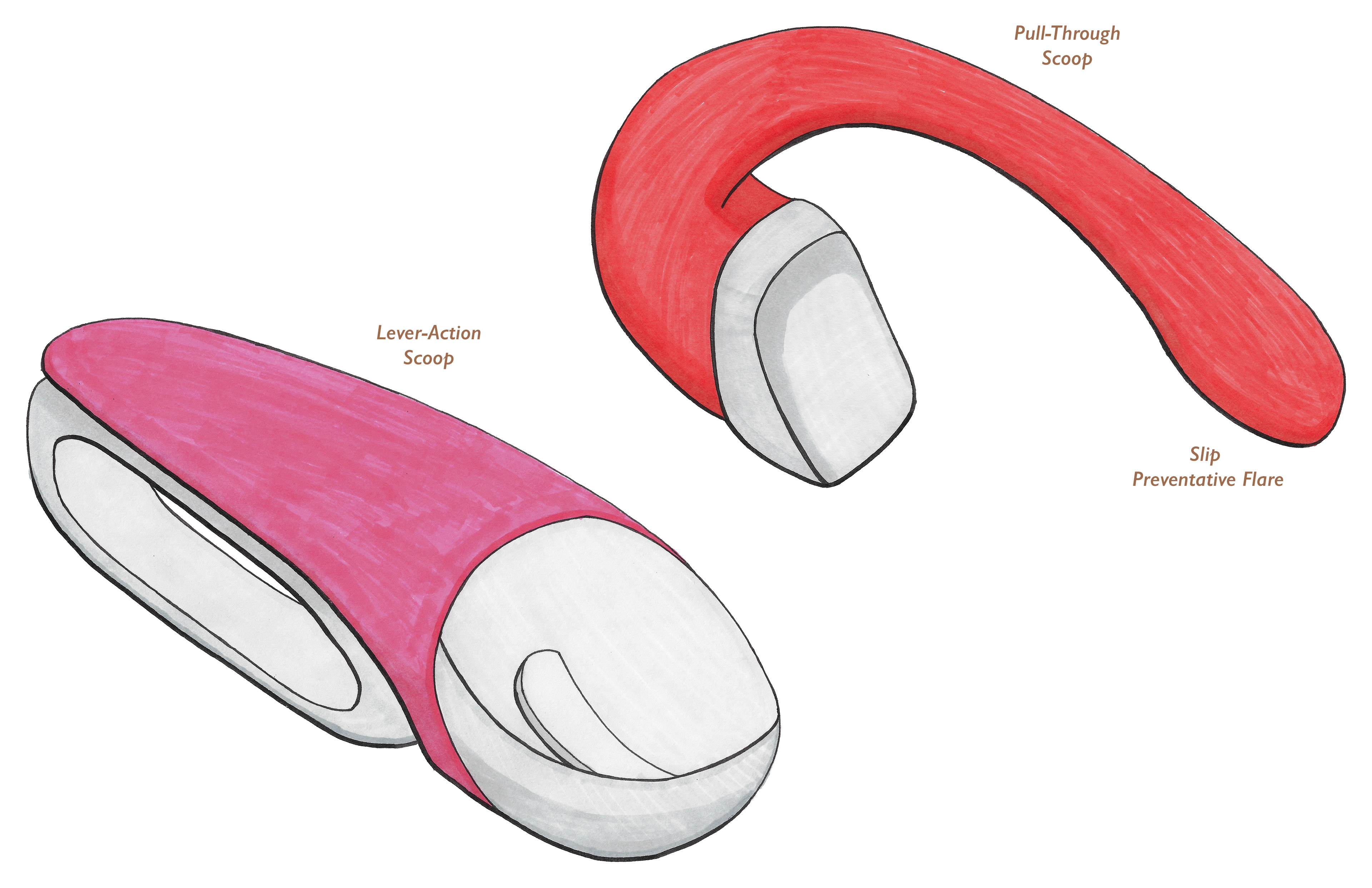
The more traditional style grip of the lever-action scoop was simple and intuitive, but posed problems with cleaning and wear on the non-lubricated steel mechanism which could lead to rusting of the steel parts.
The pull-through design was inspired by agricultural plows. While it was simpler in its sequence of use and eliminated any moving parts, variations in grip styles could not be accommodated and reaching into a carton of ice cream would be impeded by its shape.
Sketch Models
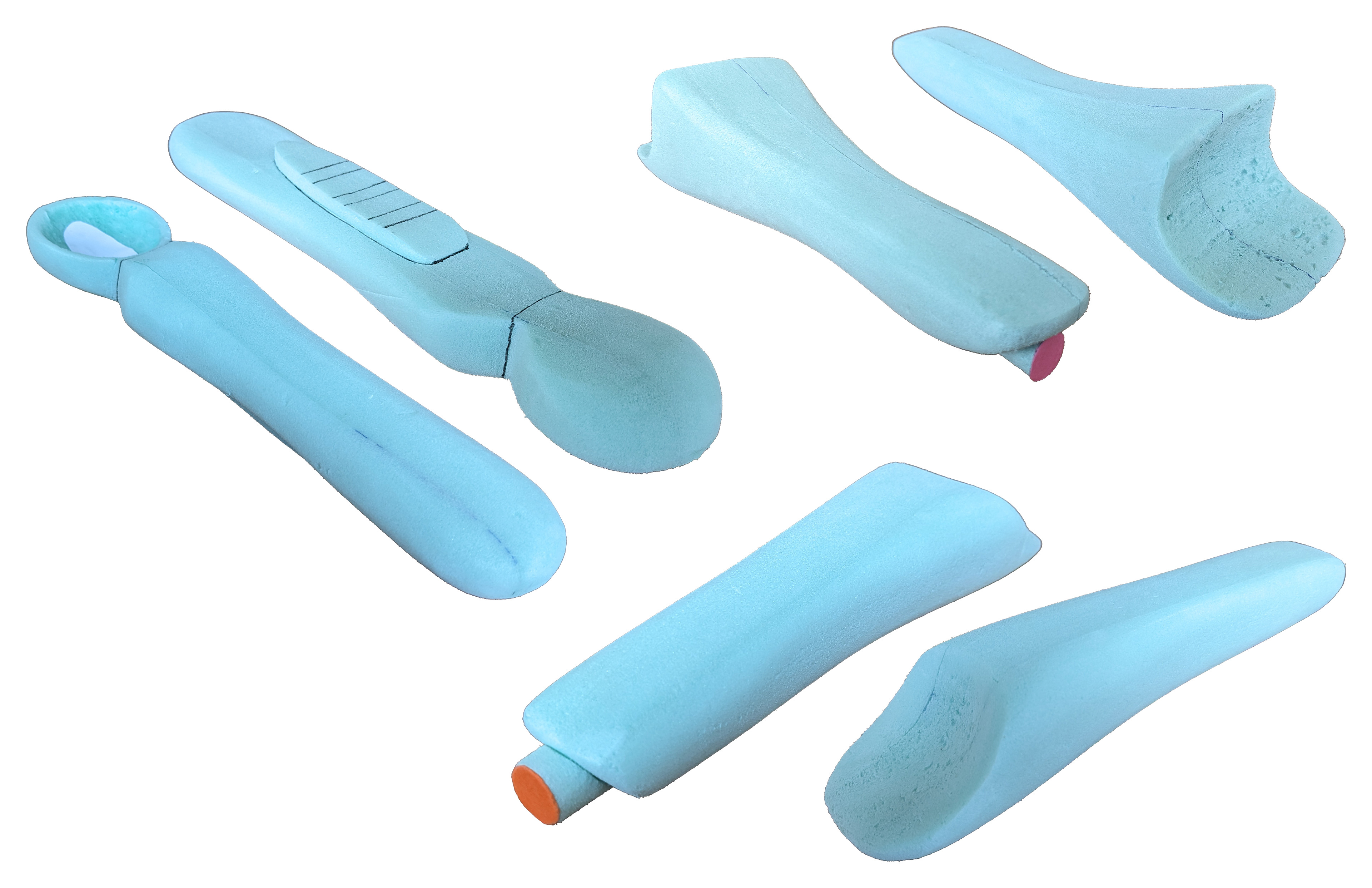
The sketch models illustrate that a mechanical solution does solve the sticking problem, but it presents a series of further issues. Seams and cracks necessary for functionality create hard to clean areas and cavities. Mechanisms are susceptible to melted ice cream entering the housing. Ice cream salt can lead to rusting and deterioration of the mechanism if left uncleaned.
On the other hand, the thermal solutions can consist of a uni-body design that allows for easy cleaning and cleaner aesthetics. Heat can be drawn from the user’s hand and stored in a thermal battery for expanded energy capacity. A color-changing interface operates as a signifier for efficient operation. Bare ceramic as a thermal battery poses burn risk to users. Lastly, the scoop shape does not lend itself to ice cream spheres.
Refined Concept
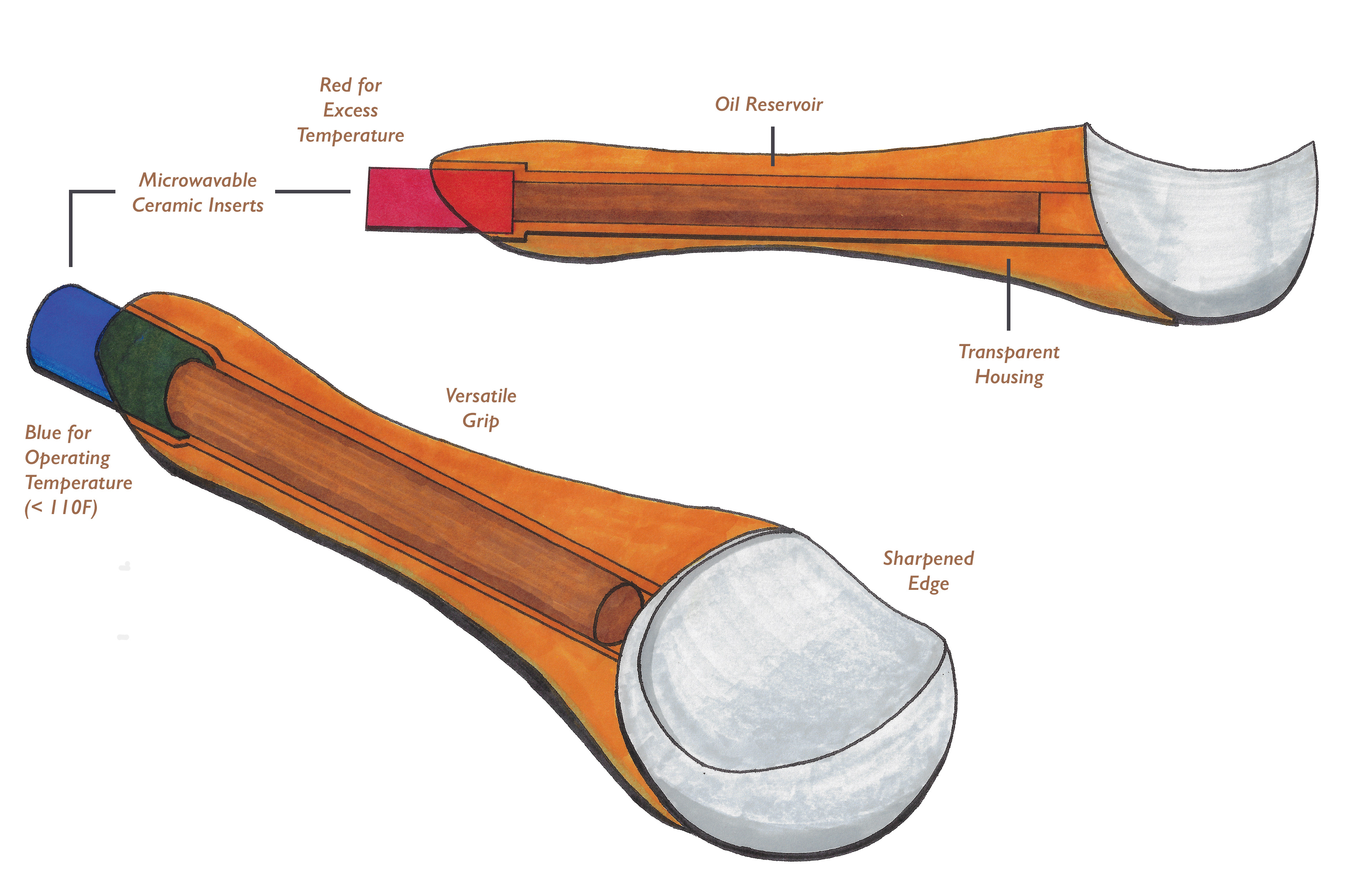
The final hand-drawn concept retains the versatile grip from the sketch models with a modification to the scoop and a microwavable ceramic insert to add additional heat into the scoop and oil reservoir.
Solution
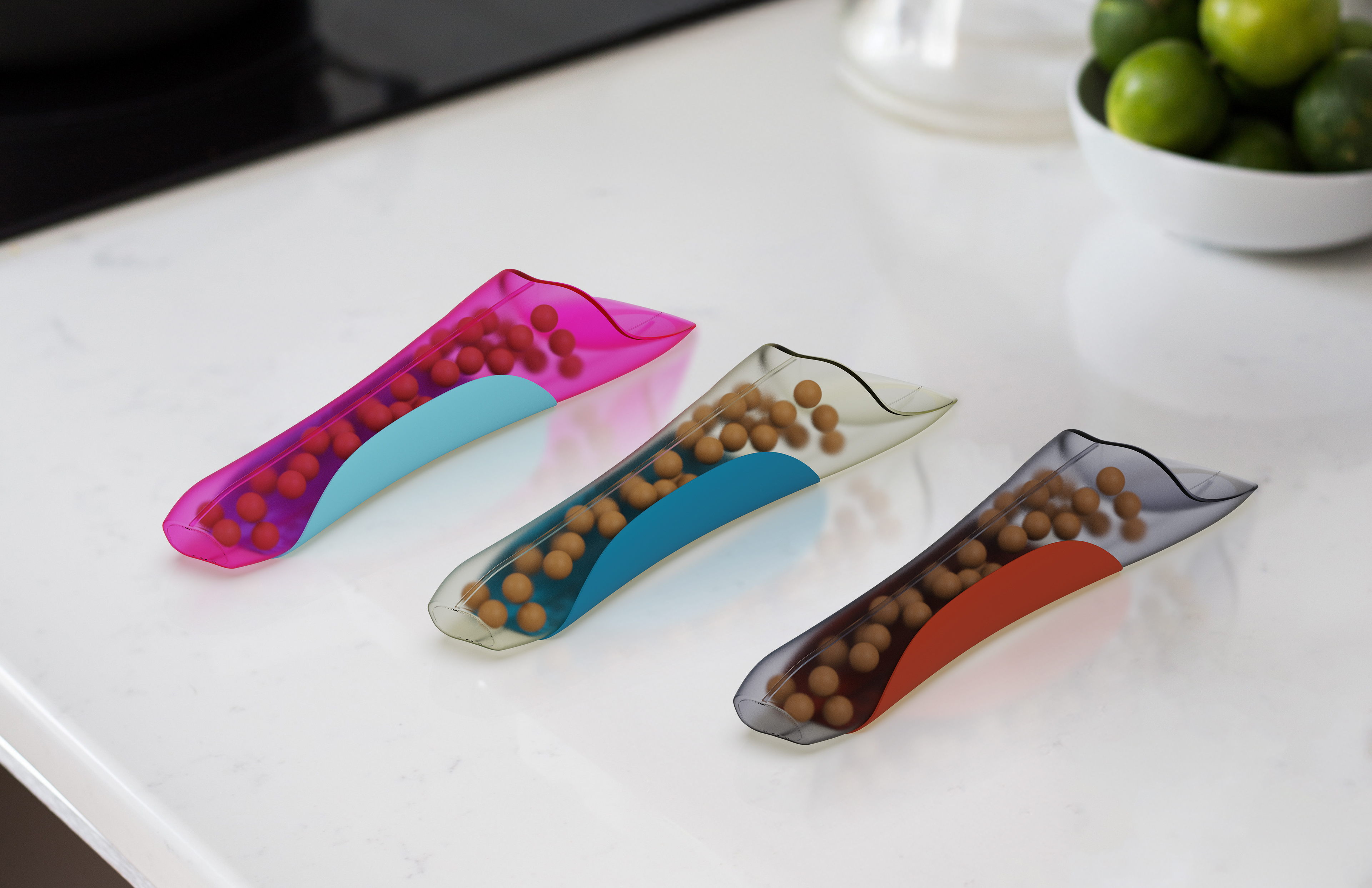
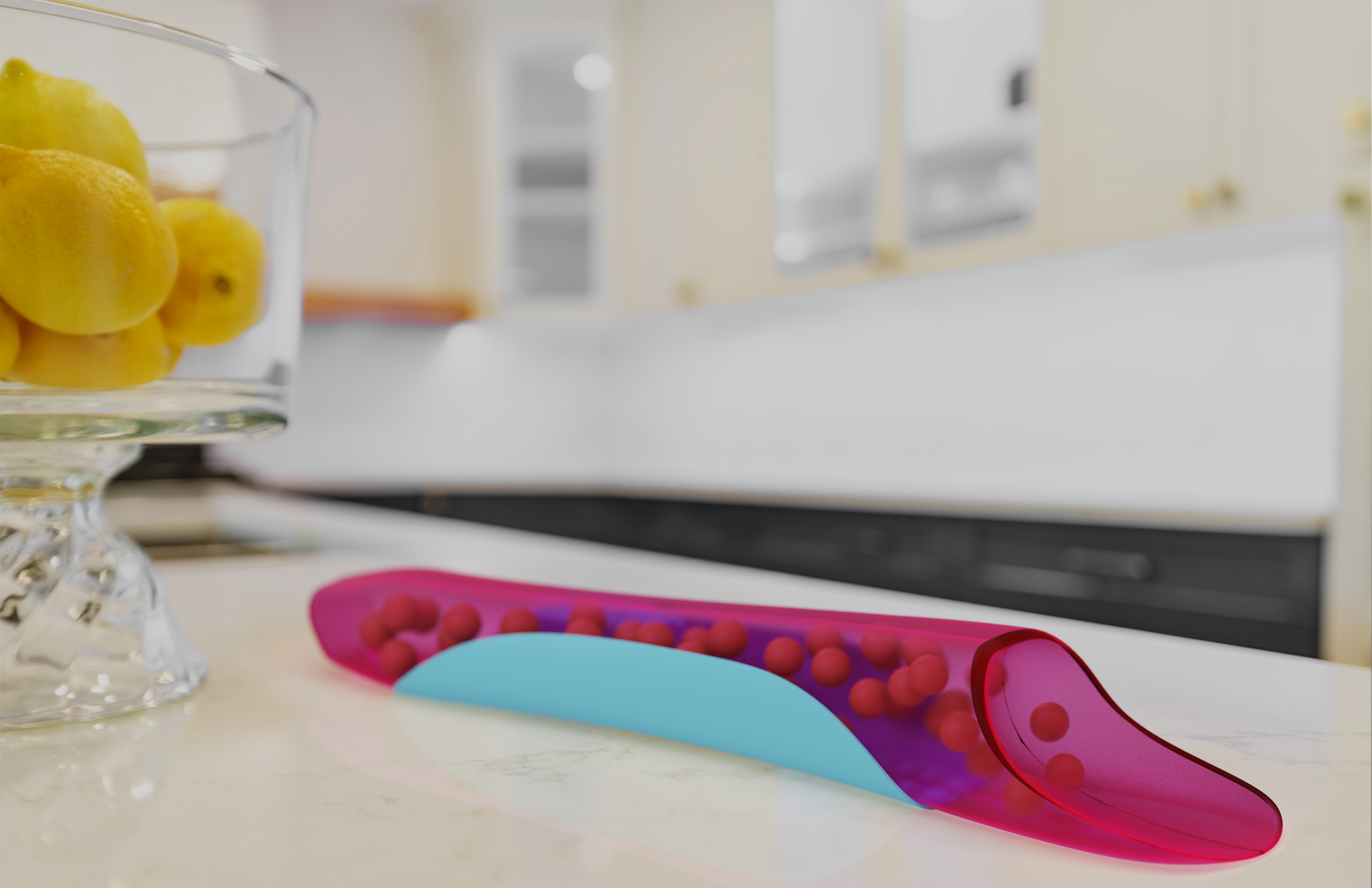
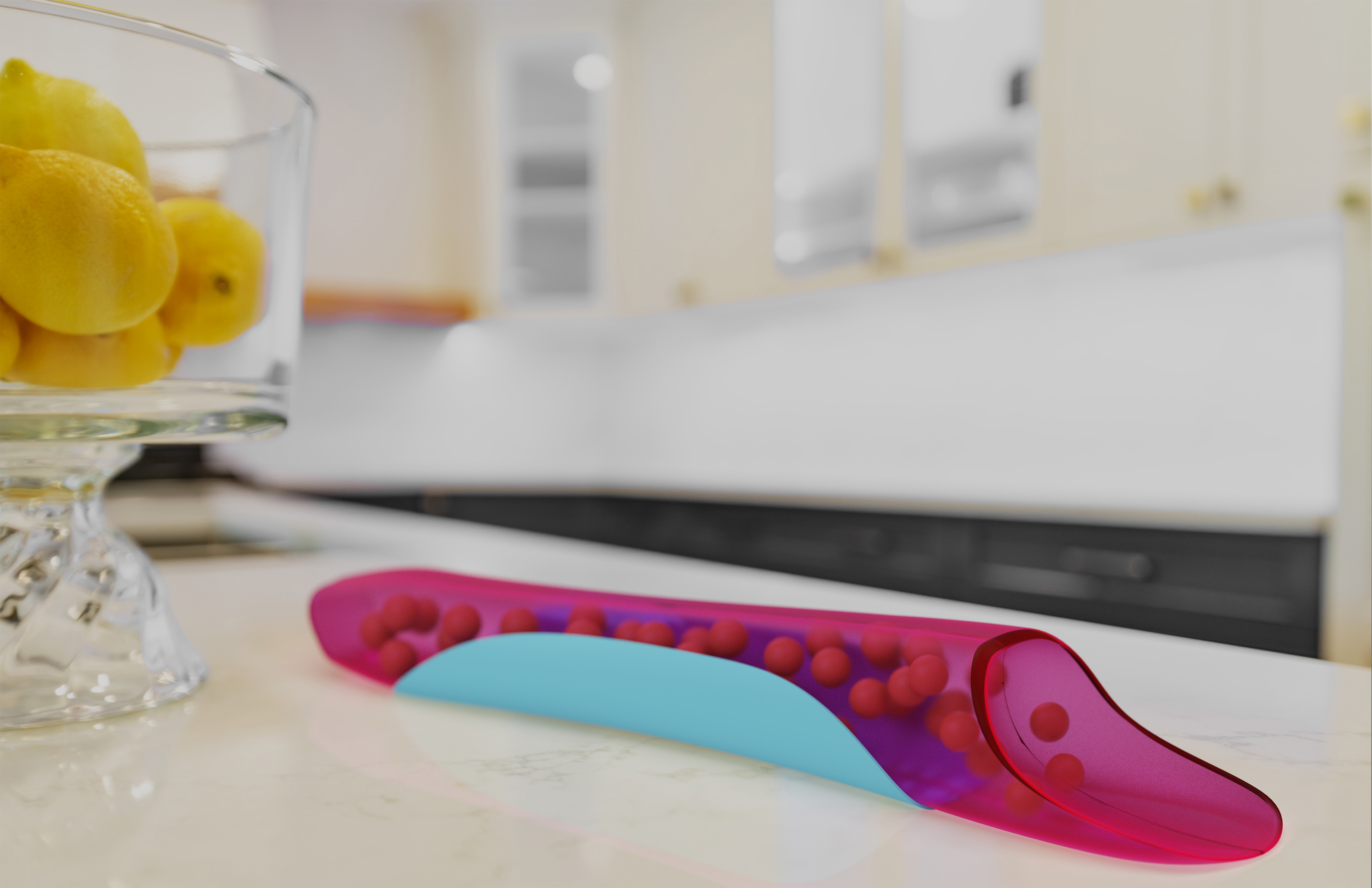
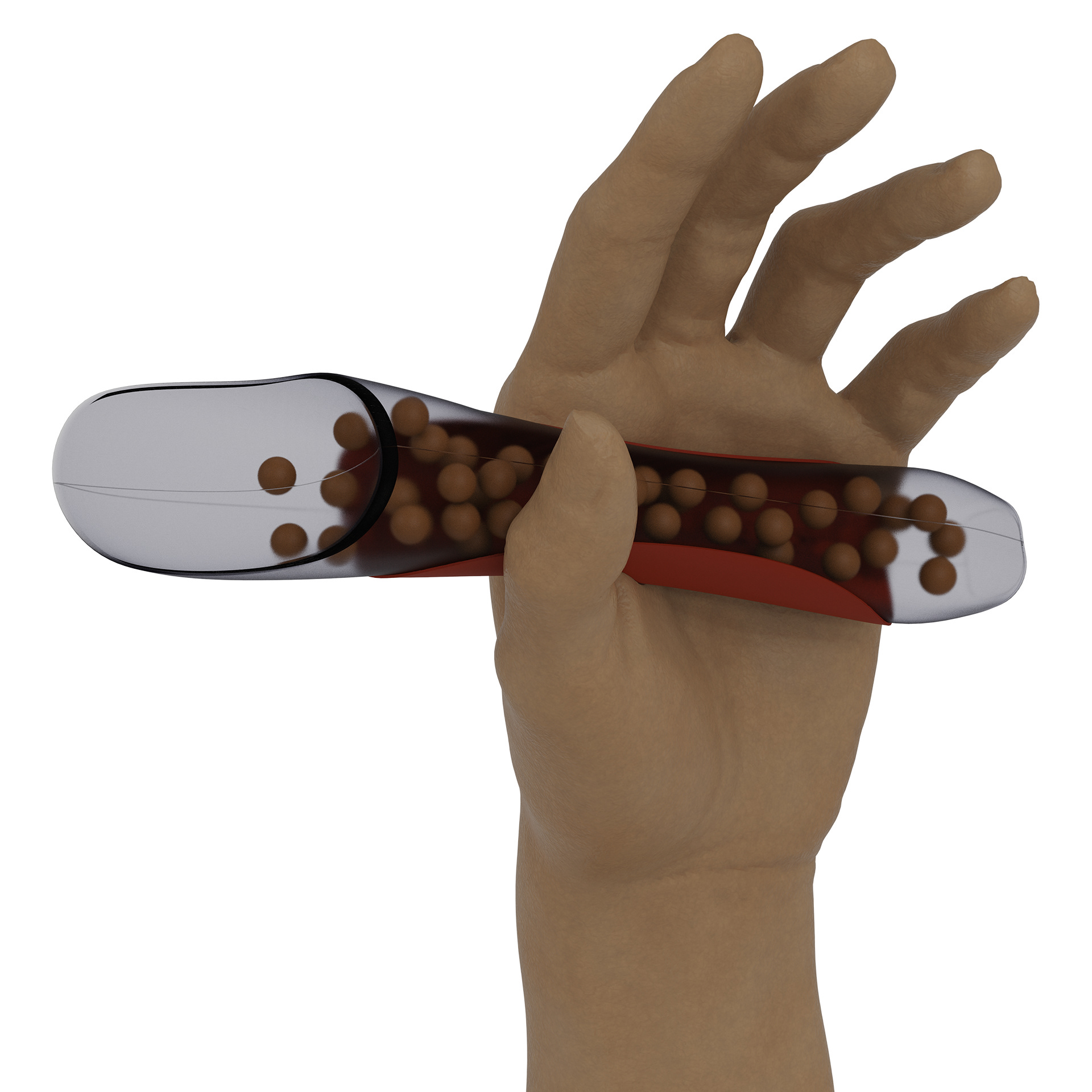
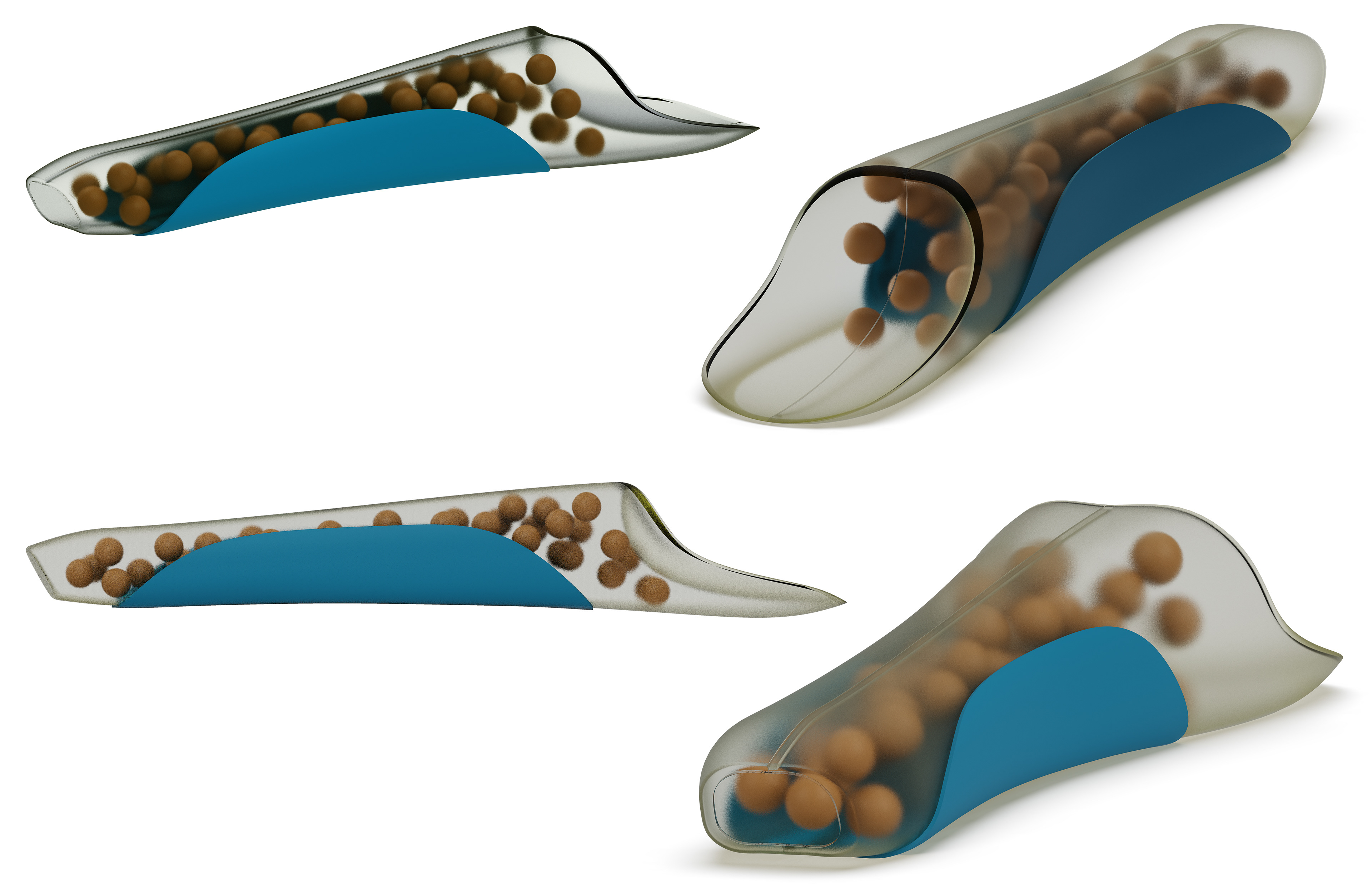
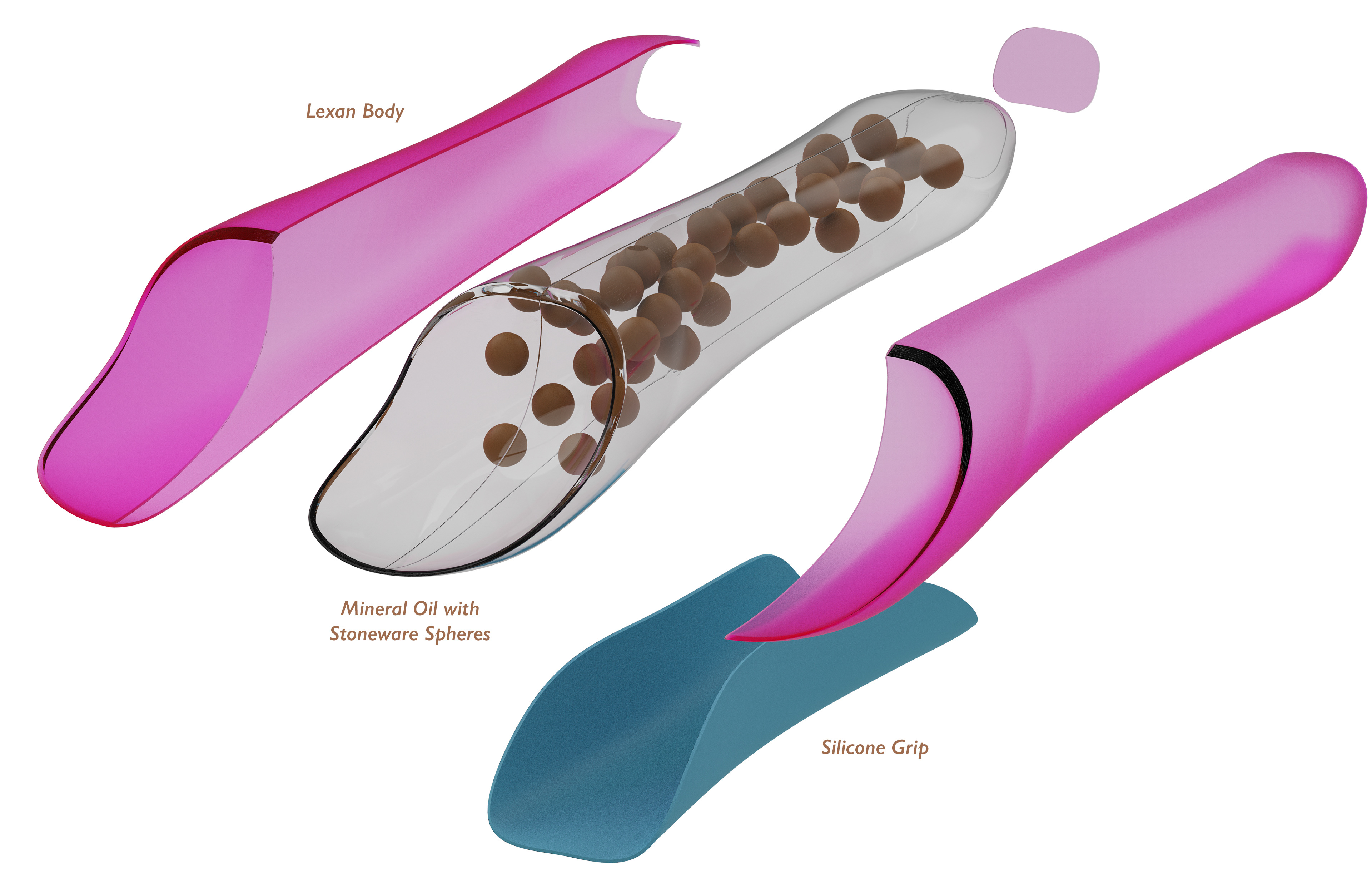
Using kinetic efficiency and thermal conduction, Flurry is designed to prevent fatigue in the user’s wrist and forearm caused by scooping ice cream. Flurry uses food grade mineral oil and ceramic spheres to conduct and circulate heat within Flurry’s transparent Lexan body. Flurry’s silicon grip is designed specifically to accommodate multiple grip styles and a range of users.
Ergonomics
Flurry’s simple and universal grip design accommodates multiple grip styles and user strengths. The grip leaves the top most area of Lexan exposed to absorb palm heat easily.
“Shake, Rattle, and Roll”
First the user shakes the spheres to circulate the oil and listens for the rattle before rolling the ice cream into the scoop. If the ice cream begins to stick, the user can simply repeat this process to recirculate the heat stored within the oil and the spheres. The inside of the scoop has full coverage within the oil reservoir, and a sharp edge profile to ease scooping and prevent the ice cream from sticking.
Assembly
Flurry is assembled by first joining two sides of the body mold. Afterwards, the body is filled with food grade mineral oil and ceramic spheres. Finally, a Lexan cap is joined to the body to seal the thermal mediums and the silicone grip is over-molded around the sides and bottom of the scoop.
Colorways
Flurry comes in a variety of body and grip colors to complement different user styles.